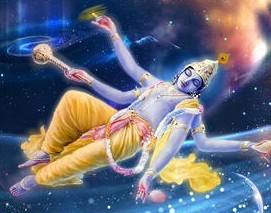
Matsya
The fish who carried Manu and the Vedas through the great flood.
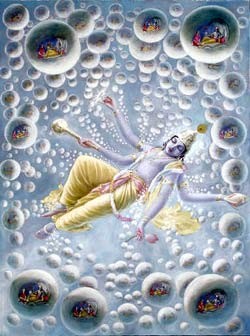
One solution to every problem: trust and devotion to Mahavishnu.
The complete Vishnu Sahasranamam over a tanpura drone. Follow the glowing verse and chant with it.
Tell Him what troubles you. Receive the verse of the Sahasranamam meant for you.
A hymn of a thousand names of Lord Vishnu, spoken on the battlefield of Kurukshetra in the presence of Krishna Himself.
Sahasra means thousand and nāma means name. Each of the thousand names describes one quality of the Supreme: Viśvam, He who is the whole universe. Acyuta, He who never falls and never lets His devotee fall. Keśava, Govinda, Padmanābha. To chant the names is to remember who He is, a thousand times over.
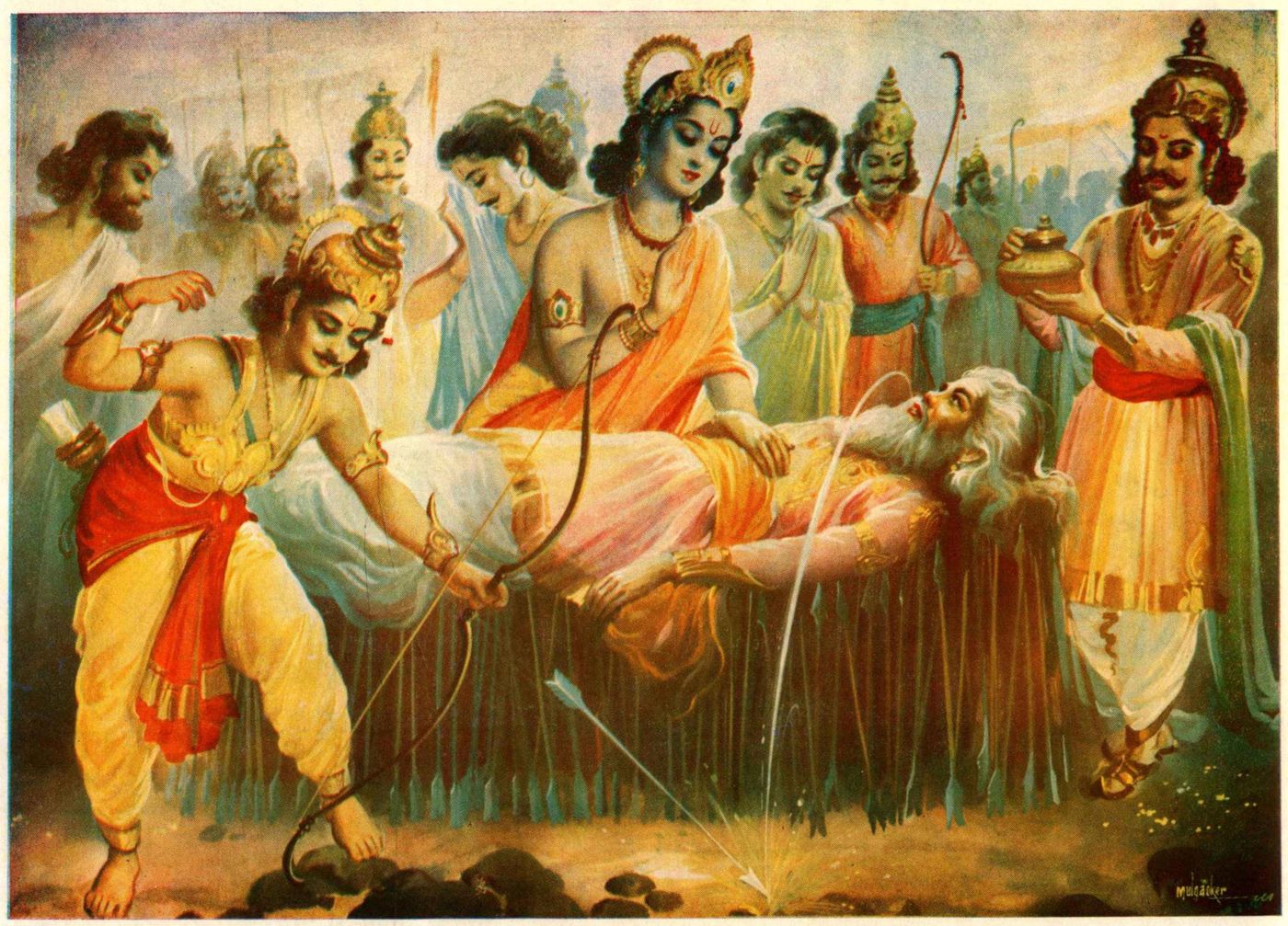
The great war was over. Grandsire Bhishma, unconquered in battle, lay on a bed of arrows, waiting for the sun to turn north before leaving his body. Yudhishthira, the new king, was crushed by the grief of the war. He came to Bhishma with his brothers, and with Krishna beside them, and asked six questions:
Bhishma answered all six with one teaching: always praise the Lord of the universe, the Supreme Person, with His thousand names, with devotion. Then he sang those names. The sage Vedavyasa recorded them in the Mahabharata, which is why he is honoured as the ṛṣi of the hymn.
Chant each name as a bow to one quality of the Lord: oṃ viśvasmai namaḥ, "salutations to Him who is the universe."
1000 names
At the end of the hymn, Bhishma himself describes what comes to one who chants these names with devotion.
The greatest fruit is devotion itself. Chant with love, not bargaining. Chanting walks alongside doctors, counsellors and your own effort; it never replaces them.
Each age, the preserver descends in a new form to restore dharma, from the fish of the great flood to the rider who closes the Kali Yuga.
paritrāṇāya sādhūnāṃ vināśāya ca duṣkṛtām dharmasaṃsthāpanārthāya sambhavāmi yuge yuge
"To protect the good, to end evil and to establish dharma, I take birth in every age." Bhagavad Gita 4.8 · Krishna to Arjuna
The fish who carried Manu and the Vedas through the great flood.
The tortoise who bore Mount Mandara as the ocean of milk was churned.
The boar who raised Bhudevi, the Earth, from the cosmic waters.
The man-lion who emerged from a pillar at dusk to protect Prahlada.
The dwarf Brahmin who measured all three worlds in three strides.
The sage-warrior who wields the axe given to him by Shiva.
The prince of Ayodhya, the ideal of righteous kingship.
The cowherd of Vrindavan who spoke the Bhagavad Gita.
The awakened one, seated in stillness beneath the Bodhi tree.
The rider on the white horse who will close the Kali Yuga.
Some traditions, especially in South India, honour Balarama as the ninth avatar in place of the Buddha. Both lists are revered.
In Jyotisha, troubles from the planets are met with remedies, called upāya. Tradition calls the Vishnu Sahasranamam the mahā upāya, the great remedy, because it goes to the source.
"Heaven with the moon, the sun and the stars, the sky, the directions, the earth and the great ocean are all held up by the power of Vasudeva." The Sahasranamam itself declares that every heavenly body is upheld by Vishnu. When you chant His names, you are praying to the One whom the planets obey.
"His enemies are burnt away, all the planets become ever gentle to him, and his sins dissolve, when this hymn is sung." These closing verses, traditionally recited after the stotram, name the planets directly.
The Bṛhat Parāśara Horā Śāstra, the foundational text of Vedic astrology, teaches that each of the nine planets is connected to an avatar of Vishnu. Bow to Vishnu, and you bow to the Lord behind every graha.
Other remedies address one planet at a time: a gemstone for one, a mantra for another, a donation for a third. The Sahasranamam addresses the Lord of all nine at once. That is why elders say, when you don't know which remedy to do, chant the Vishnu Sahasranamam.
This page shares traditional Jyotisha belief and scripture as devotional guidance.
Share how chanting has helped you, suggest an improvement, or offer a recitation you would like to contribute.
contact@vishnushastranam.in
We read every message. Oṃ namo nārāyaṇāya.